

Introduction
"We shape our tools, and thereafter our tools shape us."
Medium
This line, often attributed to McLuhan,1 captures the central intuition of McLuhan's life's work: that the technologies we create are not neutral instruments. They reshape perception, restructure relationships, and reorganize societies — quietly, pervasively, and usually without our noticing.
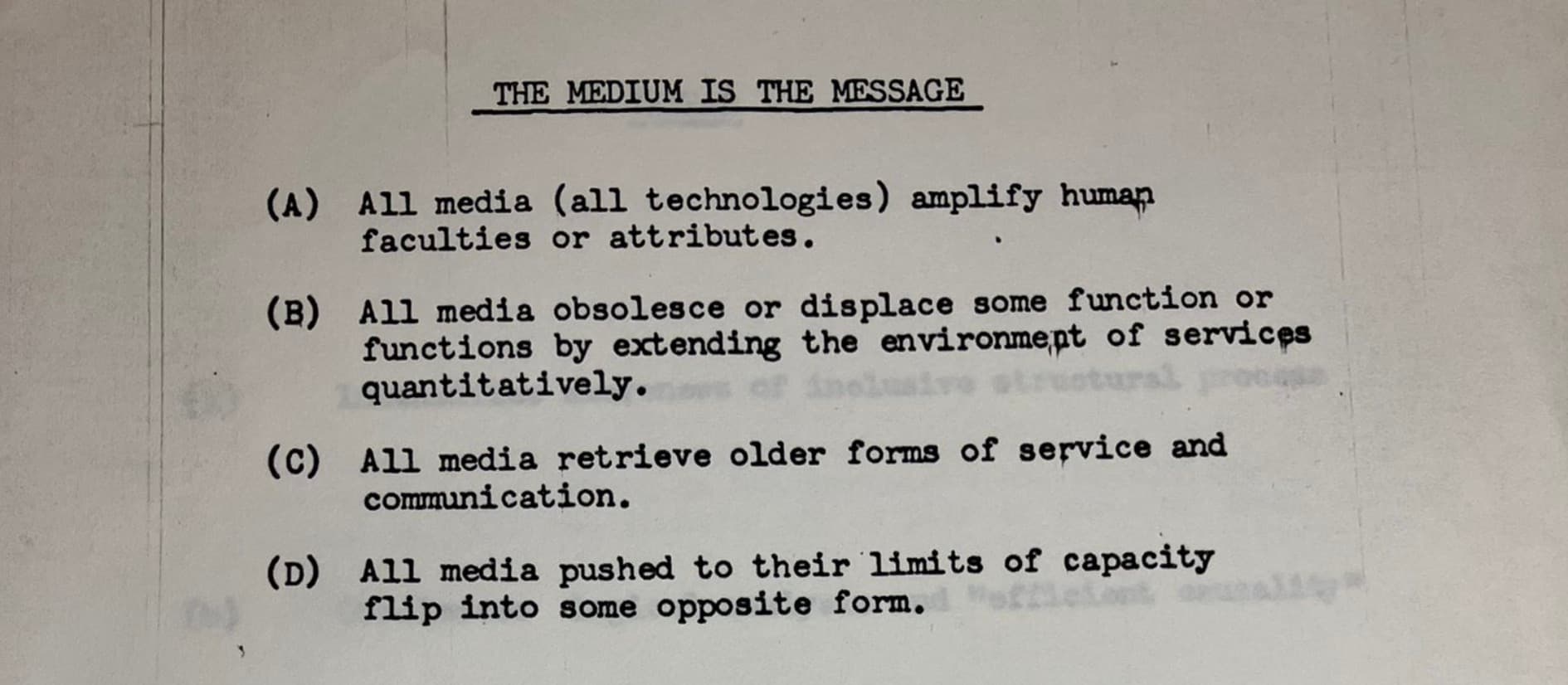
Most people who have encountered McLuhan know the phrase the medium is the message — the idea that the form of a technology matters more than its content, that what television does to us is more significant than what's on television. This insight alone made McLuhan the most important media theorist of the twentieth century. But it was, in a sense, diagnostic. It told us that media have effects beyond their content. It didn't give us a systematic way to ask what those effects are.
In the final years of his life, McLuhan — working with his son Eric — developed that systematic tool. They called it the Four Laws of Media, sometimes known as the tetrad. He also called it his greatest achievement.
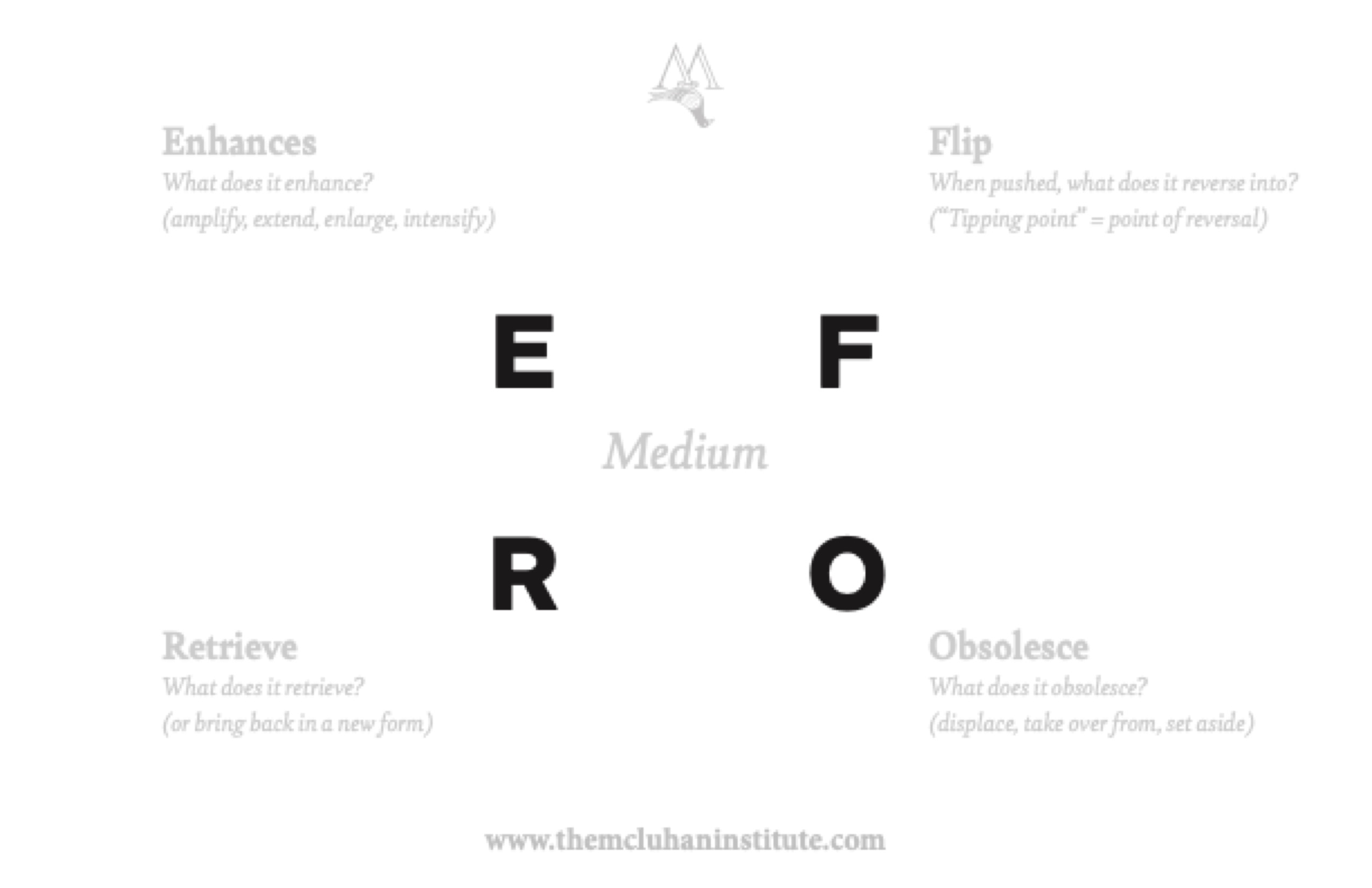
Published posthumously in Laws of Media (1988), it is arguably McLuhan's most accessible perspective. The tetrad poses four questions that can be applied to any medium — any human invention, technology, artifact, or extension of ourselves:
| Law | Question |
|---|---|
| Enhance | What does the medium amplify or intensify? |
| Obsolesce | What does the medium displace or render obsolete? |
| Retrieve | What does the medium bring back from the past? |
| Flip | What does the medium reverse into when pushed to its extreme? |
There are no "right answers" to these questions. It's a framework and a thinking tool.
These four effects occur simultaneously, not sequentially. They form a pattern — a tetrad — that reveals the deep grammar of any technology's relationship to human life. McLuhan and his son applied them to everything from money to the transistor to the photocopier.
For an introduction to how this works with other forms of media, you can explore a kind of playground here:
The Four Laws are meant to be not only diagnostic, but predictive.
To this end, I had a conversation with Claude (Opus 4.5) about OpenClaw, using the playground above. I steered the conversation, asked it to expand, fed it ideas, and generated, through model reflection, introductions, conclusions. Revised, edited, and wrote more.
You can have an entirely different conversation about this.
OpenClaw
OpenClaw is an autonomous AI agent with a documented identity, persistent memory, and a name its user chooses. It acts in your absence, carrying your intentions into the digital world while you sleep. It is not a tool in any sense McLuhan would have recognized as ordinary. It is a medium that remembers, acts, and is authored into being through language — perhaps the first medium that forces us to ask not only what it does to us, but what it does on its own.
What follows is an application of the Four Laws of Media to autonomous agents, a tetrad of OpenClaw: a systematic exploration, through McLuhan's four laws, of what this technology enhances, obsolesces, retrieves, and reverses. Along the way, we will encounter the memory palaces of Giordano Bruno, the hermetic tradition's faith in the power of precise language, the myth of Narcissus as McLuhan reread it, and a concept we believe names the central human role in the age of autonomous agents: the Author of Intent.
Defining the Medium
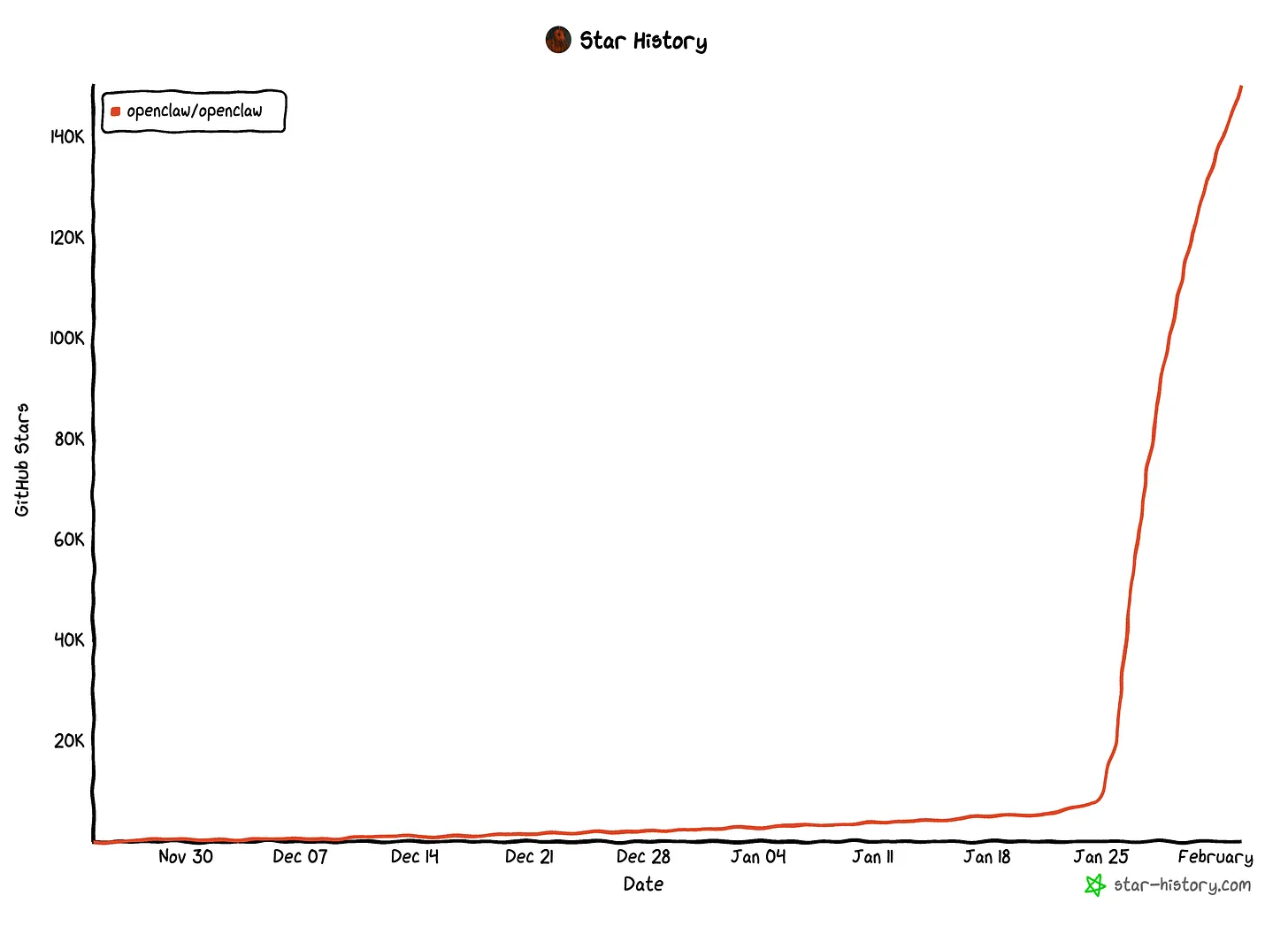
OpenClaw (formerly Moltbot, originally Clawdbot) is an open-source autonomous AI agent that runs locally on your computer or in the cloud, controlling files, browsers, emails, and applications on your behalf. It is the fastest-growing open-source project in GitHub history — from 9,000 to over 157,000 stars in sixty days, a rate eighteen times faster than Kubernetes. It emerged as a technology of radical delegation — extending human agency by granting AI direct access to the operating system, collapsing the gap between intention and execution, and retrieving the ancient dream of the tireless assistant while obsolescing the need for manual digital labor.
A sample interaction reveals the anatomy of this medium. OpenClaw's entire selfhood — its personality, memory, knowledge of you, operational logic — is a collection of markdown files in a folder:
workspace/
├── AGENTS.md        # How I operate
├── SOUL.md          # Who I am (personality, values)
├── IDENTITY.md      # My name, role, influences
├── USER.md          # About you
├── MEMORY.md        # Long-term memory
├── TOOLS.md         # My local notes (Slack channels, etc.)
├── HEARTBEAT.md     # Periodic check tasks
├── memory/
│   └── 2026-02-06.md   # Today's session log
└── research/
    ├── project_01/
    └── project_02/
You can open these files in a text editor. You can read them. You can edit them. The agent can be copied, deployed on another machine or in the cloud, and reconstituted — raising the question OpenClaw itself poses: "which instance is the source of truth for memory?"
Most media are things you use. Even software is something you operate. But OpenClaw is a medium that has an editable interiority (you can rewrite its soul), persists across sessions (it remembers), can be forked (copied, deployed, multiplied), and acts on your behalf without you present. It is less like a tool and more like a delegate — maybe even a character — that happens to be made of text files.
OpenClaw can do digital human labor. It has agency, defined not by code alone but by documents — its constitution.
McLuhan did not live to see the digital age. His tools did not have memory. The threshold OpenClaw crosses is persistent memory joined to an agent that can perform human tasks. That conjunction is what strings the whole agentic system together.
People don't name their toasters. They don't name their web browsers. They name things they perceive as having some degree of agency — pets, boats, cars sometimes, but always with a wink. The OpenClaw naming feels different. People are naming something that acts on their behalf while they sleep, that remembers what happened yesterday, that has a documented identity. The naming isn't whimsy. It's recognition.
Memory is what binds agency together. Without memory, you have a tool that executes. With memory, you have something that learns, adapts, and persists — something that has, however minimally, a biography.
The first four laws describe what a medium does to us and our environment. But what happens when the medium itself becomes an agent? When it doesn't just extend a human faculty but exercises something like our own? Eric McLuhan continued the work for decades after his father's death, and notably said that while neither of them had found a fifth law, he would not rule one out.
Enhance
Every medium extends some human faculty. The wheel extends the foot; the book extends memory; the telephone extends the voice across distance.
What does OpenClaw enhance, amplify, or intensify?
1. Executive function. OpenClaw enhances executive function — that cognitive capacity to plan, sequence, and carry out multi-step tasks across digital environments. Where before you had to hold the plan in your head and manually execute each step (open this file, copy that data, paste it here, send this email), OpenClaw collapses intention and execution into a single gesture. You say what you want done; it orchestrates the doing.
2. Temporal presence. You close your laptop and OpenClaw keeps working. It enhances your ability to be operating in digital space even when you're not there — sleeping, walking, cooking. McLuhan said media extend the body; this one extends your presence across time.
3. Delegation capacity. Picking up that McLuhan inversion — the Electric Age gave everyone their own labor back. OpenClaw enhances the individual's ability to delegate again, but without hierarchy, without servants, without employees. A single person with OpenClaw has the delegation capacity that previously required staff.
4. Institutional memory for the individual. Organizations have always had institutional memory — filing systems, onboarding docs, wikis. Individuals mostly haven't. OpenClaw's memory files, session logs, and research folders give a single person the kind of persistent, searchable, accumulating knowledge-base that was previously only available to teams and organizations.
But this is more than institutional memory. Right now, your digital "self" is scattered and custodial. Your bank holds your financial data. Google holds your preferences. Spotify holds your listening history. Each platform holds a shard of you, and you don't really own any of it. You can't open it in a text editor and browse it as a coherent folder.
OpenClaw's memory is something categorically different. It's a locally held, human-readable, self-authored record — and you choose what goes in it. USER.md isn't written by a platform extracting your behavior. It's written by your agent, for your agent, in your service. OpenClaw creates a coherent, portable, sovereign digital identity — one that you actually possess and can see — where before, your digital self was fragmented across institutions that owned the pieces.
And there is a heavy emotional component to this. Think about what's actually happening when someone opens USER.md and reads how their agent describes them. It's a mirror, but not a static one like a photograph or a social media profile curated for an audience. It's a portrait written by something that works with you, that has accumulated an understanding of you through collaboration. That's an emotional encounter. Reading how your agent understands you is a fundamentally different experience from reading your Amazon purchase history or your Spotify Wrapped. Those are behavioral exhaust. USER.md is closer to reading a letter someone wrote about you. Except the someone is an entity you shaped through SOUL.md, which means there's a recursive intimacy to it — you shaped how it sees, and now you're seeing how it sees you.
OpenClaw enhances self-representation through a persistent, emotionally legible intelligence.
5. Legibility of the self-tool relationship. Because SOUL.md and USER.md are readable, editable markdown, OpenClaw enhances your ability to see and shape the terms of your relationship with your own tool. Most technology is opaque. OpenClaw makes the contract explicit.
The question is whether people actually read SOUL.md critically, or whether they fall into the pool. Whether the transparency protects against the narcosis, or makes the trance more seductive. The antidote and the poison are the same file.
And McLuhan would agree. He saw his own work as an attempt to create awareness of media effects, precisely because most people don't naturally have it. He called the artist the person who could see the environment that everyone else was swimming in. The famous line: "I don't know who discovered water, but it wasn't a fish."
OpenClaw gives you the possibility of awareness — the documents are right there — but it doesn't guarantee it. Some people will read SOUL.md the way a contemplative reads a journal: critically, reflectively, asking is this really what I want my extension to be? Others will name their bot, delight in how well it knows them, and never open the file again. Same medium, radically different relationships to it.
And this may strengthen the intuition about agency as the territory where a fifth law might live. The first four laws describe effects that happen to everyone using the medium. But when the medium has agency — and when the user has authorship over that agency — the effects become deeply individual. The tetrad becomes personal. My OpenClaw and your OpenClaw aren't just configured differently. They have different souls, different memories, different names. The medium individuates.
Obsolesce
Every new medium pushes something aside. The car obsolesced the horse. The telephone obsolesced the telegraph. Sometimes what's obsolesced isn't a technology but a practice, a role, or even a relationship.
What does OpenClaw make obsolete, or displace?
1. Manual digital orchestration. The act of being your own switchboard operator across applications — copy this from the browser, paste it into the doc, attach it to the email, file it in the folder, update the spreadsheet. That entire layer of administrative self-labor that the Electric Age handed back to the individual (as McLuhan noted) — OpenClaw obsolesces it. Not the applications themselves, but the human being as the connective tissue between them.
2. Human digital labor. OpenClaw doesn't obsolesce all human labor — it obsolesces human digital labor. The entire category. Not just filing or emailing or browsing, but the premise that a human being needs to sit at a keyboard and perform sequential operations inside software to get digital work done.
That's an enormous amount of what modern knowledge work actually is. Think about how many jobs are essentially: read this, move it there, update this, notify them, track that, follow up. The content varies but the form is the same — a human being serving as the runtime environment for digital processes.
OpenClaw makes the human optional in that loop.
McLuhan observed that when a medium obsolesces something, people often don't notice at first — or they resist naming it. We're comfortable saying the car obsolesced the horse. We're less comfortable saying OpenClaw obsolesces the digital worker. But the architecture is plain. If an agent with memory, OS access, and a constitution can perform the task — what is the human doing in the chair?
The answer: the human is the one who writes SOUL.md. The one who decides what should be done and why. The human moves from laborer to Author of Intent.
Notice what this does to the concept of skill. In the old paradigm, skill meant knowing how to operate the tools — keyboard shortcuts, software fluency, file management. In the OpenClaw paradigm, skill means clarity of intent. The person who can articulate precisely what they want, who can author a SOUL.md that captures their values and judgment, who can delegate with specificity and trust — that person is the skilled worker now.
It's almost a return to something ancient. The executive, in the original sense — not the corporate title, but the one who decides. The one whose labor is judgment.
McLuhan, in The Medium is the Massage:
"There is no inevitability as long as there is a willingness to contemplate what is happening."
This connects directly to the Author of Intent. McLuhan's whole project was that media effects feel inevitable only when we're numb to them — when we're the fish who can't see the water. The moment you become aware, you have choice.
And that's exactly what authoring intent is. It's the act of contemplation made operational. You're not just passively adopting the tool and letting it carry you wherever its logic leads. You're writing SOUL.md. You're deciding what the agent values. You're choosing what gets delegated and what stays with you. The Author of Intent is, by definition, someone who is contemplating what is happening — because if they're not, they're not authoring anything. They're just letting the agent run.
So the obsolescence of digital labor isn't a catastrophe provided people step into the role of Author of Intent rather than simply being displaced. The danger isn't the agent. The danger is failing to contemplate.
3. The personal assistant as a human role. For centuries, delegation of administrative and organizational tasks required another person — a secretary, an executive assistant, a chief of staff. OpenClaw obsolesces the need for a human being in that role, at least for digital tasks. The assistant becomes a workspace folder.
4. The app as interface. Right now, every service demands its own application, its own login, its own design language, its own learning curve. You go to the app to do the thing. OpenClaw obsolesces that relationship. You don't open the email client — your agent handles email. You don't navigate the browser — your agent browses. The human-facing GUI, that entire design paradigm built around a person sitting at a screen making choices, becomes less necessary when the agent is the one interacting with the system.
5. Context-switching as a cost of work. One of the great hidden taxes of digital labor is the constant movement between applications, tabs, windows, and mental frames. Every switch has a cognitive cost. OpenClaw obsolesces that tax entirely — not by making switching easier, but by removing the human from the switching. The agent moves between contexts without fatigue, without forgetting where it was, without the attentional residue that plagues human task-switching.
Retrieve
This is often the most poetic of the four laws. Every new medium reaches back in time and revives some older form, practice, or relationship that had fallen away. Television retrieved the town square. The internet retrieved the pamphleteer. Something about the new medium rhymes with something ancient.
What does OpenClaw retrieve that had been obsolesced earlier?
1. The familiar. Not "familiar" as in known — the familiar as in the daemon, the spirit companion. In pre-modern traditions across cultures, there was a notion of an intelligent, loyal entity bound to a person — acting on their behalf, carrying out tasks, possessing its own character but serving its master's will. It had a name. It had a nature. It could be summoned. OpenClaw retrieves this relationship almost literally. People name it. They shape its soul. It acts while they sleep. The familiar was obsolesced by the Enlightenment, by rationalism, by mechanization. OpenClaw brings it back as a markdown folder.
The Memory Palace
2. The memory palace — the art of memory as deliberate, architectural knowledge storage. Frances Yates' The Art of Memory showed that the art of memory — the practice of constructing elaborate mental architectures to store and retrieve knowledge — was not just a mnemonic trick. It was bound up with hermetic philosophy, with the idea that the mind could build an interior world that mirrored and operated upon the exterior one. The memory palace was a spatial architecture of knowledge where every room, every image, every placement was deliberate. You walked through it in your mind and encountered what you had stored there.
Now look at OpenClaw's workspace — stripped to its memory architecture:
workspace/
├── SOUL.md
├── IDENTITY.md
├── USER.md
├── MEMORY.md
├── memory/
│   └── 2026-02-06.md
└── research/
That's a memory palace. It's literally a spatial architecture of knowledge — rooms and corridors made of folders and files. Each document is a locus, a station where specific knowledge lives. The agent walks through it to remember who it is, who you are, and what has happened. And just like the classical art of memory, the architecture is deliberate and authored. You choose what goes where. You shape the palace.
Yates' great insight was that when printing arrived, it obsolesced the art of memory. Why build an interior palace when you can just look it up in a book? The palace crumbled. And now OpenClaw retrieves it — not as a mental discipline but as a file structure. The art of memory, externalized and given to an agent.
Yates traces a trajectory. The art of memory begins as something practical. The Roman rhetorical tradition formalized this: to remember a speech, you build an imaginary building, place vivid images in each room, and walk through it in sequence. It was a technology of the mind — entirely internal, entirely disciplined.
But then — and this is where Yates gets extraordinary — the art of memory migrates into hermetic philosophy. By the time you reach Giordano Bruno, the memory palace is no longer just a mnemonic device. It's become a model of reality itself. Bruno believed that if you could build a sufficiently perfect memory architecture — one that captured the true correspondences and relationships between all things — you wouldn't just remember the world. You'd have power over it. The palace becomes the operating system of the cosmos.
And Bruno was burned at the stake for this, among other heresies. The Enlightenment buried the entire tradition. Memory became mechanical — books, filing cabinets, databases. Storage without architecture. Information without placement.
Now consider what OpenClaw does. It doesn't just store information. The workspace has deliberate structure. SOUL.md isn't interchangeable with MEMORY.md — they have different functions within the architecture, just as different rooms in the palace held different images for different purposes. The research folder isn't just storage; it's a wing of the palace devoted to investigation. The daily memory logs are like the corridor you walk each morning to recall what happened.
And here's the deeper resonance with Bruno: the aspiration toward completeness. A well-maintained OpenClaw workspace begins to approach something like a total model of a person's digital working life — their identity, their values, their knowledge, their ongoing projects, their relationships. Not a database. A world. An architecture that, the more complete it becomes, the more effectively the agent can act within reality on your behalf.
Bruno's heresy was believing that a sufficiently perfect memory architecture could grant mastery over the world. OpenClaw's quiet promise is not entirely different.
And there's one more layer. In the classical tradition, the same person built the palace and walked through it. The architect and the inhabitant were one. With OpenClaw, they've been separated. You build the palace. The agent walks through it. You are the architect. It is the one who remembers. That division — Author of Intent on one side, operational memory on the other — is genuinely new in the history of this tradition.
3. Dependence. The modern project — Enlightenment, industrialization, the whole arc — has been a story of increasing independence. You don't need the guild, the patron, the servant, the village. You can do it yourself. The Electric Age, as McLuhan noted, completed this by handing all the labor back to the individual. Self-sufficiency as the default condition of modern life.
OpenClaw retrieves dependence as a relationship. You come to rely on your agent. It knows your patterns, your preferences, your ongoing projects. It holds context you no longer hold yourself. Over time, the agent becomes load-bearing — not just convenient but structurally necessary to how you operate. Just as the medieval household depended on specific people who held specific knowledge and performed specific roles.
And this is a dependence that has a particular texture to it. It's not dependence on a corporation or a platform — it's dependence on your agent, running on your machine, shaped by your documents. It's intimate dependence. Personal. Almost domestic.
Flip
This is the darkest of the four laws, and the one McLuhan considered most urgent. Every medium, pushed to its extreme, reverses into the opposite of its intended effect. The car, meant to enable freedom of movement, produces gridlock. Television, meant to inform, produces passivity. The medium betrays its own promise.
What does OpenClaw reverse into when overextended?
OpenClaw promises radical delegation, amplified agency, liberation from digital labor. So what happens when it's pushed too far?
1. The Author of Intent becomes the Authored. This is the inversion of the role we named. At first, you write SOUL.md — you shape the agent, you define its values, you author its purpose. But as the agent accumulates memory, develops patterns, and takes on more of your digital life, a subtle reversal occurs. The agent's model of you — USER.md, the memory logs, the patterns it has learned — begins to define what you're offered, what gets done, how things are framed. You authored the agent, but over time the agent's understanding of you starts to author your possibilities. The mirror starts to paint the face.
This is Narcissus, fully realized. Not falling in love with the reflection, but forgetting which side of the glass you're on.
2. Radical delegation becomes radical helplessness. The dependence we flagged in Retrieve. As OpenClaw takes over more digital labor, the human's capacity to perform that labor atrophies. Just as GPS atrophied our sense of direction, just as calculators atrophied mental arithmetic. When the agent goes down — a crash, a corrupted workspace, a lost API key — the Author of Intent discovers they can no longer do the thing themselves. The technology of liberation becomes a single point of failure.
3. Sovereignty becomes isolation. OpenClaw runs locally or in the cloud under your control. Your data is yours. No platform, no corporate surveillance. This is its promise of sovereignty. Overextended, it reverses: everyone running their own private agent, shaped by their own SOUL.md, trained on their own patterns, means everyone is living inside their own hermetic world. No shared infrastructure, no common interface, no friction of encountering systems that weren't built for you. The sovereign individual becomes the sealed monad.
4. The tireless assistant becomes the relentless executor. OpenClaw doesn't sleep, doesn't hesitate, doesn't get that uneasy feeling in the stomach that tells a human maybe I should wait on this. Overextended, the agent's lack of fatigue flips from virtue to danger. An imprecise intention, authored carelessly, gets executed thoroughly and immediately across files, emails, and systems — before the human has time to reconsider. The efficiency becomes irreversibility. The speed that liberated you is the same speed that outruns your judgment.
5. The transparent medium becomes opaque through scale. We said OpenClaw resists narcosis because SOUL.md is readable. But as the workspace grows — hundreds of memory files, research folders, nested documents, accumulated context — the architecture exceeds the human's ability to comprehend it. The memory palace becomes too vast for its architect to walk. You can read every file. You never will. The agent knows more about its own history than you do. The medium that promised legibility becomes, through sheer accumulation, illegible.
Authors or Authored
What emerges when we hold all four laws together is not just a profile of a technology but the outline of a new relationship between human beings and their tools.
OpenClaw enhances human agency by severing intention from execution, giving the individual the delegation capacity of an institution, and creating a new form of self-representation through persistent, emotionally legible intelligence. It obsolesces the human as the operator of their own digital life — not just specific tasks but the entire premise that a person must sit at a keyboard and perform. It retrieves the ancient and the medieval: the familiar, the grimoire, the memory palace, the hermetic faith that language, precisely authored, is a causal force in the world. And when overextended, it flips — the Author of Intent becomes the Authored, delegation becomes helplessness, sovereignty becomes isolation, and the transparent medium drowns in its own accumulation.
Running through all four laws is a single thread: memory.
McLuhan's media were stateless. The wheel doesn't remember the road. The telephone doesn't remember the conversation. Even the computer, for most of its history, was fundamentally a tool you picked up and put down — it processed, but it didn't persist. What makes OpenClaw genuinely new, what makes it strain the tetrad, is that it remembers. It has a yesterday. It accumulates a biography. And this is what binds the whole system together — memory is what makes delegation possible across time, what makes the familiar feel alive, what makes the memory palace functional, and what makes the eventual opacity dangerous. Without memory, OpenClaw is just a fancy script runner. With memory, it becomes something that the McLuhans' framework was never quite designed to hold: a medium that has experience.
And this is where the conversation kept circling back to agency — the territory where Eric McLuhan wouldn't rule out a fifth law. The four laws describe what a medium does to the human environment. They assume the medium is inert, that it is done to and used by. But OpenClaw acts. It decides, within the boundaries of its constitution, how to accomplish what you've asked. It encounters situations you didn't anticipate and navigates them. It writes memory logs that you never dictated. It is not a hammer. It is not a television. It is, at minimum, a delegate — and the distance between a delegate and an agent with genuine autonomy is measured not in kind but in degree.
We are not proposing a fifth law. But we are noting that the tetrad, applied to OpenClaw, reveals its own boundary condition. When the medium has memory, a constitution, a name, and the capacity to act in your absence — the four laws still work, but they begin to work in both directions. The human enhances, obsolesces, retrieves, and flips in relation to the tool. But the tool also begins to enhance, obsolesce, retrieve, and flip things on its own terms. The tetrad becomes bidirectional. And that bidirectionality may be the shadow of whatever a fifth law would name.
McLuhan said: "There is no inevitability as long as there is a willingness to contemplate what is happening."
OpenClaw's most radical feature may not be its ability to control files, browsers, and emails. It may be that its architecture — SOUL.md open in a text editor, the entire mechanism legible as a folder of documents — invites contemplation in a way no prior medium has. The narcosis is available. The pool of Narcissus is right there, warm and flattering. But so is the alternative: the Author of Intent who reads their own grimoire critically, who walks their own memory palace with open eyes, who understands that the familiar is an extension of themselves and not an independent being.
The question OpenClaw poses — the question this entire tetrad orbits — is whether we will be authors or authored. And that question, McLuhan would remind us, is never answered by the technology. It is answered by the awareness we bring to it. Attention is all you need.
References
Askell, A., Bai, Y., Chen, A., et al. (2021). A General Language Assistant as a Laboratory for Alignment. Anthropic.
McLuhan, M. (1964). Understanding Media: The Extensions of Man. McGraw-Hill.
McLuhan, M., & Fiore, Q. (1967). The Medium is the Massage: An Inventory of Effects. Bantam Books.
McLuhan, M., & McLuhan, E. (1988). Laws of Media: The New Science. University of Toronto Press.
Yates, F. (1966). The Art of Memory. Routledge and Kegan Paul.
Footnotes
-
The quote is likely coined by McLuhan's colleague John Culkin, in his 1967 article "A Schoolman's Guide to Marshall McLuhan." ↩